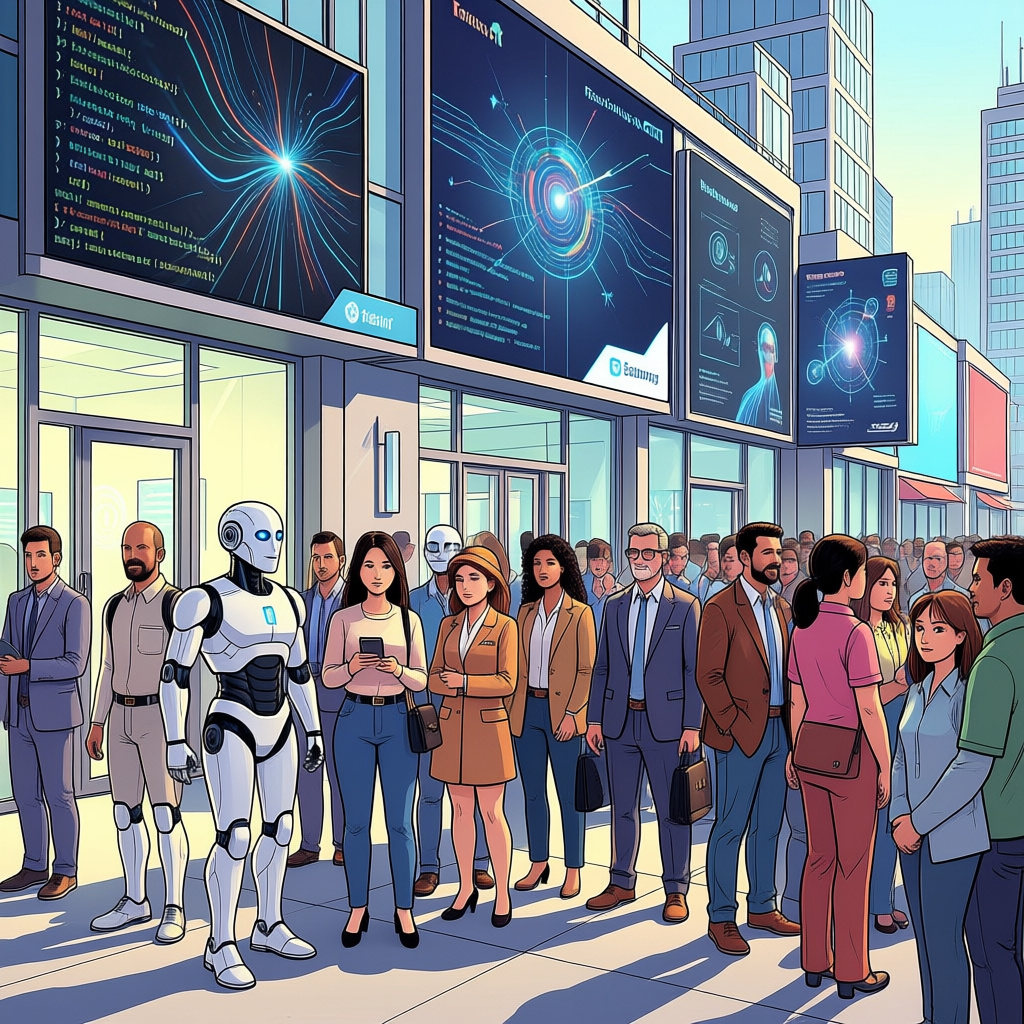
Are AI Agents Replacing Developers – or Redefining Software Roles?
Why AI Is Shaping Hiring Needs in 2026 Artificial intelligence no longer feels like a future prospect; it affects hiring...

Why AI Is Shaping Hiring Needs in 2026
Artificial intelligence no longer feels like a future prospect; it affects hiring decisions right now. Organisations in the UK and beyond continue to integrate AI agents into software workflows, and this shift has rapidly changed what engineering teams look like. Candidates often ask whether AI will replace developers. In truth, AI is reshaping which skills organisations prioritise rather than eliminating the need for human talent.
In 2026, tech leaders hire for capability, not just coding proficiency. They look for people who can work with AI, guide it, and solve problems that AI alone cannot address. Instead of replacing developers, AI tools have expanded the landscape of what software roles actually entail, influencing workforce strategy, skills priorities, and hiring decisions across industries.
Developers Still Matter, But Their Role Has Evolved
Hiring managers today often start with a simple question: “What can humans do better than machines?” The answer shapes job requirements. Software developers now shoulder not only coding responsibilities but also design thinking, architectural decision‑making, and ethical oversight of AI systems.
Organisations increasingly expect engineers to understand the whole lifecycle of AI‑augmented delivery. The McKinsey & Company reports that technology teams that integrate AI into their workflows see productivity gains with human decision‑making still central to delivery outcomes.
Developers who know how to guide AI agents, interpret their outputs responsibly, and troubleshoot complex system interactions now attract more attention from hiring teams than those who only write code.
Hiring for AI Fluency and Collaboration Skills
Employers want candidates who can collaborate with AI systems to enhance delivery. Skills like prompt engineering, AI integration design, and testing AI‑generated code have moved closer to mainstream expectations. Traditional degrees or years of experience only matter if candidates demonstrate the ability to deploy and interact effectively with AI tooling.
Evidence from workforce studies shows that organisations prioritise adaptability and AI fluency more than ever. The World Economic Forum highlights that future‑focused roles increasingly combine technical skills with digital judgement and cross‑functional communication.
Hiring teams use this insight to balance technical depth with the ability to steer and validate AI contributions, reducing risk and improving quality. Candidates who articulate how they approach AI cooperation stand out in interviews and assessment stages.
Strategic Thinking Beats Routine Coding
AI agents excel at routine coding, automated testing, and generating boilerplate code. Hiring leaders care much more about strategic thinking and problem framing. In many organisations, the highest priority candidates are those who understand business context, map user outcomes to technical implementation, and solve ambiguous problems that AI cannot decode on its own.
Research shows that organisations with strategy‑oriented technical teams outperform peers in digital transformation initiatives. Developers who contribute insight and direction rather than just writing code help reduce time to value and improve software resilience.
The Gartner notes that AI augments productivity but also raises expectations around how humans contribute to design, quality and supervision of machine‑assisted work.
From a resourcing angle, this shift pushes employers to hire candidates who demonstrate critical thinking, architecture judgement, and ethical responsibility alongside technical fluency.
AI Integration Specialists Become Key Hires
Organisations in 2026 look for specialists who can integrate AI into internal platforms and workflows. Hiring needs increasingly include roles such as AI systems architect, MLOps engineer, and AI safety/ethical governance specialist. These positions require not just coding knowledge but also understanding of models, pipelines, infrastructure, and how these systems interact with human teams.
As AI adoption expands across sectors, these roles bridge gaps between core engineering, data science, and operational delivery. Employers value candidates who can translate business needs into AI‑aligned solutions, manage data dependencies, and maintain governance frameworks that prevent costly errors or compliance issues.
Technical workforce analysis shows that organisations investing in AI capability as part of broader transformation strategies often prioritise hires who can both lead adoption and ensure reliable operation of AI systems over teams that focus solely on traditional development.
Soft Skills Gain Relative Importance
Technical skill alone cannot carry a candidate to offer stage in 2026. Hiring managers increasingly value communication, collaboration, and adaptability alongside technical fluency. These human skills help teams coordinate complex tasks, resolve edge‑case errors that AI misses, and translate technical decisions into business impact.
Studies continue to show that employee engagement and cross‑functional teamwork strongly influence project success, particularly in technology roles where uncertainty and iteration remain constant factors. Candidates who show strong teaming ability and articulate how they collaborate with both humans and AI agents stand out in interviews.
Upskilling and Lifelong Learning Become Hiring Assets
AI tools evolve rapidly. Organisations prefer candidates who demonstrate a commitment to continuous learning and skill expansion. Developers who regularly update their capabilities, experiment with emerging frameworks, and integrate new methods into delivery approaches align well with strategic hiring goals.
Training and upskilling support not only individual growth but also organisational adaptability. Labour market research notes that employers increasingly invest in talent development to remain competitive as technology evolves. This includes structured learning pathways, mentorship and internal mobility that help employees grow into AI‑augmented roles.
Hiring for Impact Supports Strategic Outcomes
Many organisations now tie hiring decisions directly to measurable outcomes rather than task completion alone. Successful hires contribute to product velocity, system reliability, security, and customer value. AI agents assist with repetitive work, but human talent makes decisions that prove whether a feature delivers impact or introduces risk.
In 2026, resourcing strategy increasingly aligns hiring needs with long‑term capability goals rather than short‑term output. Employers draft role descriptions that emphasise value creation and AI collaboration skills, helping attract candidates who can contribute meaningfully to strategic priorities.
Conclusion: AI Agents Redefine Roles, Not Replace People
AI agents shape the future of software work, but they do not eliminate the need for human expertise. Developers evolve from pure coders into orchestrators of complex systems, interpreters of AI outputs, and strategic contributors within teams.
Hiring teams that respond to this shift by prioritising AI fluency, problem framing, strategic judgement, and continuous learning build stronger, more adaptable technology organisations. Talent strategy in 2026 therefore looks forward rather than backward – focusing on what developers will become in partnership with AI, not what they once were.
As the industry continues to transform, candidates who demonstrate both human insight and effective use of AI tools will lead the next generation of technology leadership. The future of hiring resides in the space where human ingenuity and machine capability meet.