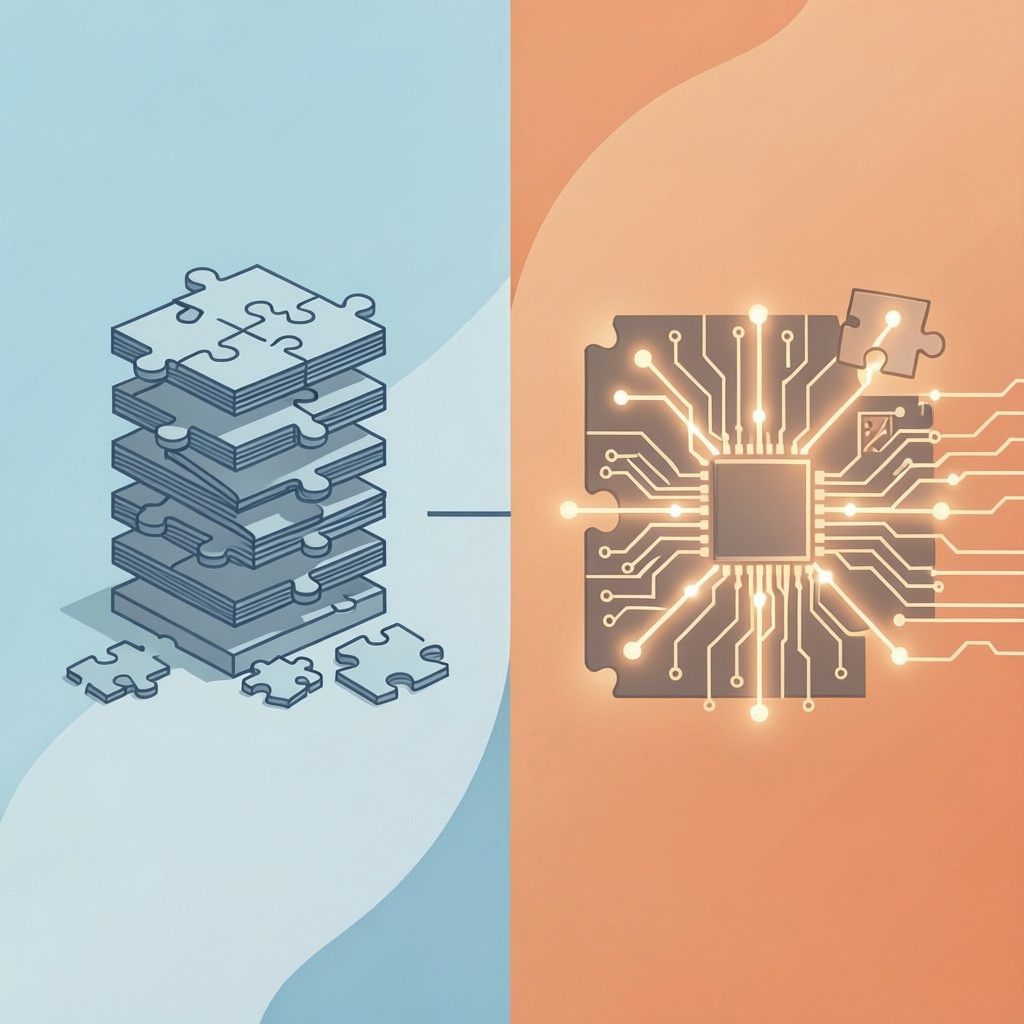
Entry-level technology jobs have traditionally given people a way into the industry. Graduates, apprentices and career changers could start with junior responsibilities, build practical experience and gradually take on more complex work.
Artificial intelligence may be changing that pathway.
AI tools can now assist with tasks that once provided some of the earliest opportunities for junior technology professionals, particularly in areas such as coding, testing, research and data analysis.
That doesn’t mean entry-level technology jobs are disappearing. It does mean employers may need to rethink what they expect from junior candidates and how they develop people once they join.
Is AI Reducing Entry-Level Technology Jobs?
There is evidence that entry-level hiring has become more difficult in the UK, but it would be too early to say that AI is solely responsible.
A June 2026 UK Government analysis of entry-level hiring found that hiring had weakened across the wider labour market. Of 38 entry-level occupations tracked in the analysis, 30 were declining. Software Engineer hiring had fallen by 27%, while Data Analyst hiring had fallen by 15%.
The same research found that the roles experiencing the sharpest declines were often those where AI capabilities had advanced significantly. However, the report specifically warns that this does not establish a causal relationship between AI and the decline in hiring.
Technology hiring has been affected by wider economic and labour market conditions, so organisations should avoid assuming that every reduction in junior recruitment results from automation.
What Happens When AI Can Do Junior-Level Tasks?
The bigger question may not be whether AI eliminates entry-level jobs.
It may be whether AI changes the work that junior employees traditionally did.
A junior Software Engineer might previously have spent considerable time writing straightforward code, fixing relatively simple issues or carrying out repetitive testing. AI tools can now assist with some of those activities.
That creates an interesting problem for employers.
Junior roles have never existed only to complete routine tasks. They have also provided a structured way for people to develop professional judgement, learn how systems work and gain experience from more senior colleagues.
If AI removes some of the simpler work, employers need to consider how junior professionals will develop those skills.
The answer may be to give entry-level employees different responsibilities rather than simply reducing the number of junior roles.
Will Entry-Level Technology Roles Need Different Skills?
The skills expected from junior technology professionals may increasingly extend beyond basic technical knowledge. As AI becomes part of everyday technology work, entry-level employees may also need enough AI literacy to use these tools effectively and understand their limitations.
For example, a junior developer may use AI-assisted development tools as part of their workflow, while a junior Data Analyst may use AI to support analysis and still need to check whether the results are accurate and relevant. In other technology roles, junior professionals may need to recognise when AI-generated output requires further investigation or human review.
The key skill is not simply knowing how to use an AI tool. It is understanding when to use it, how to evaluate what it produces and when human judgement is still required.
Could Employers Expect More From Junior Candidates?
There is a risk that changing technology could encourage employers to raise entry-level requirements rather than rethink the role.
A vacancy might begin as a junior Software Engineer position but gradually accumulate requirements for commercial experience, cloud platforms, AI tools, multiple programming languages and previous experience working in a professional development environment.
That creates a difficult contradiction.
If employers expect entry-level candidates to arrive with the capabilities of experienced professionals, they reduce the number of realistic entry points into the technology sector.
The problem is particularly significant when employers need experienced candidates because they have less capacity to train junior employees.
Hiring teams should therefore distinguish between what a candidate needs to know before joining and what they need to learn after joining.
A junior employee does not need to arrive fully formed. They need enough foundation to contribute, learn and develop.
What Could Entry-Level Technology Roles Look Like?
Entry-level roles may become less focused on completing predictable tasks and more focused on learning how to manage technology effectively.
That could mean junior employees spend more time reviewing AI-generated work, investigating problems, supporting senior professionals, testing systems, documenting decisions and learning how technology affects wider business processes.
The balance will vary by role.
A junior Software Engineer might need stronger code-review and debugging skills alongside programming knowledge. A junior Cybersecurity professional might spend more time investigating alerts and validating automated findings. A junior Data professional might need to focus more heavily on interpreting results and checking data quality.
These are still entry-level responsibilities.
They simply reflect a workplace where AI handles more of the routine activity.
Does This Make Junior Talent More Valuable?
It could.
Skills England’s 2026 analysis of the digital and technologies sector expects substantial growth across priority occupations and identifies higher-than-average proficiency in core skills such as problem-solving and decision-making, digital literacy, and learning and investigating.
The same assessment describes AI-driven changes in technology work, including a shift away from some routine coding and testing towards oversight, verification, communication and judgement.
That could increase the importance of people who can develop those capabilities over time.
For employers, the opportunity is to think about junior hiring as part of a longer-term talent pipeline rather than simply a way to fill lower-cost positions.
Someone who enters a technology team with strong fundamentals and develops alongside changing tools may become more valuable as their experience grows.
How Should Employers Hire Junior Technology Talent?
The first step is to define what the junior employee will actually do.
Employers should identify the technical foundations that matter, the responsibilities the person can reasonably take on and the skills they can develop through training and experience.
AI capability can then be assessed as part of that wider picture.
The candidate may not need specialist AI expertise. They may simply need enough understanding to use AI tools responsibly, question their output and continue developing their technical judgement.
This approach can also help employers avoid creating unrealistic entry-level vacancies.
If every junior role requires previous professional experience, advanced AI knowledge and multiple technical specialisms, employers risk shrinking the very talent pipeline they will eventually depend on.
Could AI Change the Meaning of “Entry-Level”?
It probably will.
Entry-level may increasingly describe a person’s stage of professional development rather than the simplicity of the tasks they perform.
A junior employee could work with sophisticated AI tools from their first day while still developing the judgement and experience needed to operate independently.
That creates a different model of progression.
Instead of starting with simple work and gradually moving towards more advanced tools, new professionals may work with advanced tools immediately while learning how to evaluate, manage and apply them effectively.
The responsibility for developing that capability will not sit entirely with candidates.
Employers will also need to create roles that allow junior professionals to learn.
The Future of Entry-Level Technology Hiring
AI may change what “entry-level” means in technology, but the bigger question for employers is whether their hiring and development practices change with it.
If the pathway into technology becomes narrower, organisations could make future skills shortages harder to solve. Employers that continue to create realistic entry points and develop people early in their careers will be better placed to build the talent they need as technology evolves.
The challenge is not simply deciding which tasks AI can perform. It is deciding how people at the beginning of their careers will gain the experience needed to become the technology professionals of the future.