7 Entry-Level Hiring Mistakes That Are Blocking Future Talent
Why Entry-Level Hiring Decisions Shape the Future Workforce Entry-level hiring does more than fill immediate vacancies. It builds the foundation...

Why Entry-Level Hiring Decisions Shape the Future Workforce
Entry-level hiring does more than fill immediate vacancies. It builds the foundation of future capability, leadership, and organisational resilience. Companies that invest carefully in early-career talent often create strong internal pipelines, while those that rush hiring decisions face recurring shortages and rising recruitment costs.
Workforce data continues to show that entry-level hiring is becoming more complex as skill expectations shift and automation increases screening demands. Research into the changing labour market from the Office for National Statistics highlights that many organisations now expect early-career hires to contribute faster, even as traditional entry points become harder to access.
Hiring leaders who recognise these pressures early can avoid common mistakes that quietly block emerging talent. A thoughtful approach to entry-level recruitment supports long-term growth, strengthens retention, and builds a culture of learning that benefits the entire organisation.
Mistake One: Expecting Experience From True Beginners
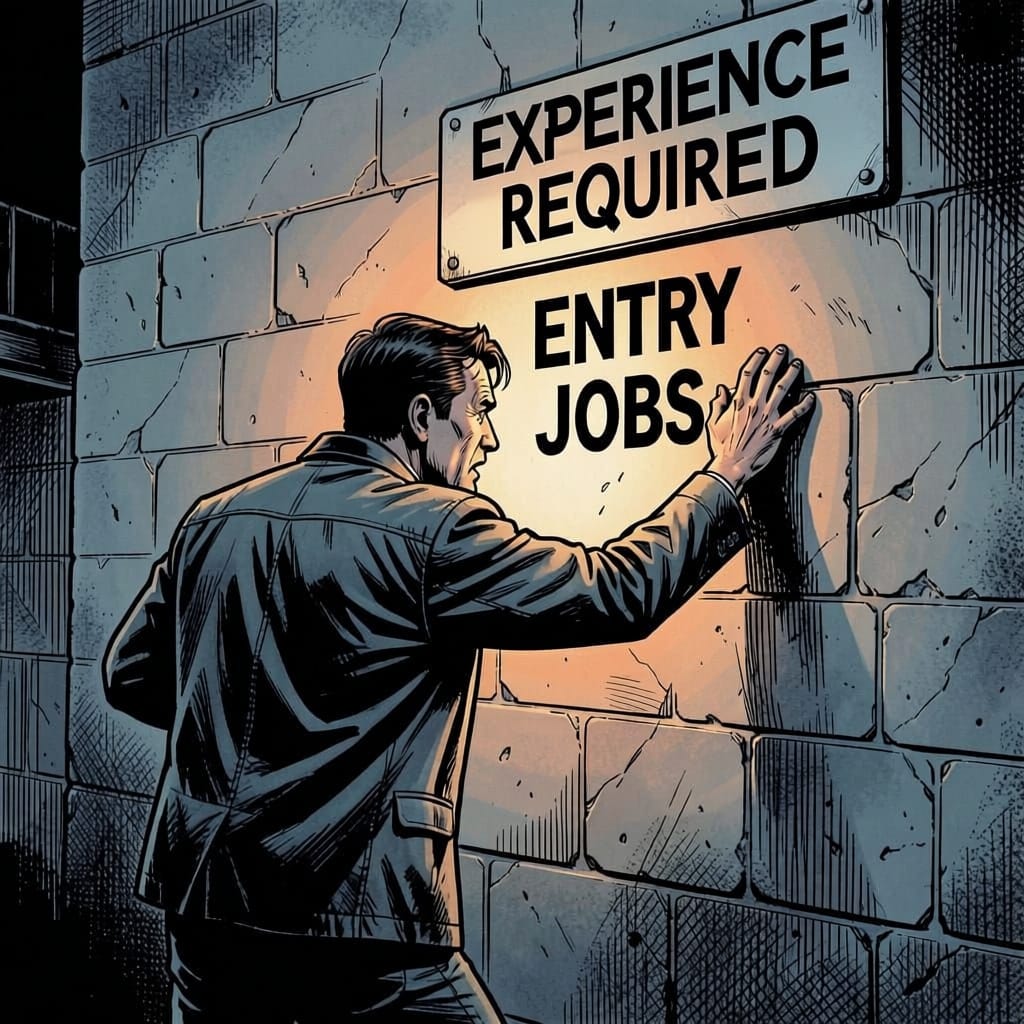
Many organisations advertise entry-level roles that quietly require years of prior experience. This expectation creates a barrier that prevents capable candidates from entering the workforce at all. It also limits diversity of thought, as only candidates with unusual early exposure can meet unrealistic criteria.
Industry analysis by Rezi shows that a significant portion of entry-level job postings now demand prior experience, creating what experts call “experience inflation.” This trend leaves graduates and career starters trapped in a cycle where they cannot gain experience because employers expect them to already have it.
Hiring teams that redefine entry-level roles around learning potential rather than immediate productivity open doors to talent that competitors overlook. That shift strengthens long-term workforce capability and reduces reliance on costly mid-level hiring later.
Mistake Two: Over-Relying on Automated Screening Systems
Automation offers speed, yet excessive reliance on screening tools can filter out candidates who demonstrate promise but lack traditional credentials. Algorithms often prioritise keywords and structured qualifications, which do not always reflect adaptability or growth potential.
Modern hiring practices increasingly depend on automation to manage large application volumes. However, research from ArXiv shows that automated screening can unintentionally exclude qualified candidates who simply lack specific phrasing or standardised career paths.
Human review remains essential in early-career hiring. Organisations that combine automation with thoughtful evaluation processes preserve efficiency without sacrificing opportunity.
Mistake Three: Ignoring Skills in Favour of Credentials
Traditional hiring methods often focus on degrees, certifications, and academic pathways. While credentials provide useful context, they rarely capture real-world capability on their own.
Employers across industries are gradually shifting toward skills-based hiring, recognising that demonstrable ability often predicts performance more accurately than formal education alone. Current hiring trend analysis confirms that skills-based evaluation ranks among the top priorities for organisations navigating talent shortages in 2026. Skills-First Hiring and Workforce Planning Trends for 2026
Resourcing teams that design assessments around real tasks create stronger hiring outcomes. Candidates who demonstrate curiosity, problem-solving ability, and practical knowledge often grow into high-performing employees with proper support.
Mistake Four: Treating Entry-Level Hiring as a Short-Term Fix
Urgent hiring frequently prioritises speed over long-term thinking. Teams facing pressure to deliver projects quickly may focus only on immediate tasks rather than future workforce development.
Short-term hiring decisions often produce short-lived employment relationships. Employees who lack growth pathways or strategic alignment rarely stay long enough to justify onboarding and training investment.
Research into workforce trends by Leapsome shows that organisations increasingly view hiring as part of broader workforce planning rather than a reactive function. Strategic alignment between hiring decisions and long-term goals strengthens retention and improves productivity across teams.
Forward-looking hiring leaders evaluate each entry-level role through the lens of future capability, not just current workload.
Mistake Five: Underestimating the Importance of Training and Development
Some organisations expect entry-level employees to perform immediately without structured onboarding or training support. That expectation creates frustration, delays productivity, and increases early attrition.
The widening skills gap across digital and technical roles highlights the importance of continuous development. Employers consistently report difficulty finding candidates with exact skill matches, reinforcing the need to build talent internally through guided learning pathways.
Training transforms potential into performance. Companies that invest in mentorship, onboarding programmes, and continuous learning retain early-career hires at higher rates and build stronger organisational knowledge over time.
Mistake Six: Failing to Communicate Role Expectations Clearly
Ambiguous job descriptions create confusion before the hiring process even begins. Candidates often misunderstand responsibilities, required skills, or growth opportunities when employers provide vague information.
Clear communication reduces mismatched expectations and supports smoother onboarding experiences. Organisations that define responsibilities accurately attract applicants who genuinely align with the role’s purpose.
Workforce insights by eSkill indicate that hiring complexity continues to increase as job functions evolve. Employers who clarify expectations early reduce hiring delays and improve candidate engagement throughout the recruitment cycle.
Transparency builds trust and encourages long-term commitment among early-career hires.
Mistake Seven: Overlooking the Long-Term Value of Entry-Level Talent
Some organisations treat entry-level hiring as a low-priority function, focusing resources instead on experienced hires. That approach often overlooks the strategic advantage of nurturing talent from the beginning of a career.
Investing in early-career talent builds organisational resilience. Employees who grow within a company often demonstrate stronger loyalty and deeper institutional knowledge than external hires.
Building Stronger Talent Pipelines Through Better Hiring Practices
Entry-level hiring mistakes rarely appear dramatic in isolation. Each misstep may seem minor, yet repeated patterns gradually weaken talent pipelines and increase recruitment pressure across departments.
Organisations that refine entry-level hiring processes create competitive advantages that extend beyond immediate recruitment outcomes. Thoughtful hiring strategies strengthen culture, improve retention, and support continuous innovation.
Leaders who recognise the strategic value of early-career hiring position their organisations for long-term success. Strong entry-level hiring does not simply fill vacancies; it builds the workforce that will lead tomorrow’s transformation.