The Rise of AI Managers: Why Technical Professionals Are Becoming Orchestrators
Edited June 2026

The Role of Technical Professionals Is Changing
For decades, technical careers followed a relatively predictable path. Software developers wrote code, infrastructure engineers managed systems, data specialists analysed information, and project managers coordinated delivery. Technology professionals built, maintained, and improved the tools organisations relied upon.
Artificial intelligence is beginning to change that model.
Rather than replacing technical professionals outright, AI is increasingly taking over specific tasks that once consumed significant amounts of time. Code generation, testing support, documentation creation, data analysis, infrastructure automation, and operational monitoring can now be assisted by AI systems working alongside human teams.
As a result, many technology professionals are spending less time performing individual tasks and more time directing, validating, coordinating, and improving the output of AI-driven tools.
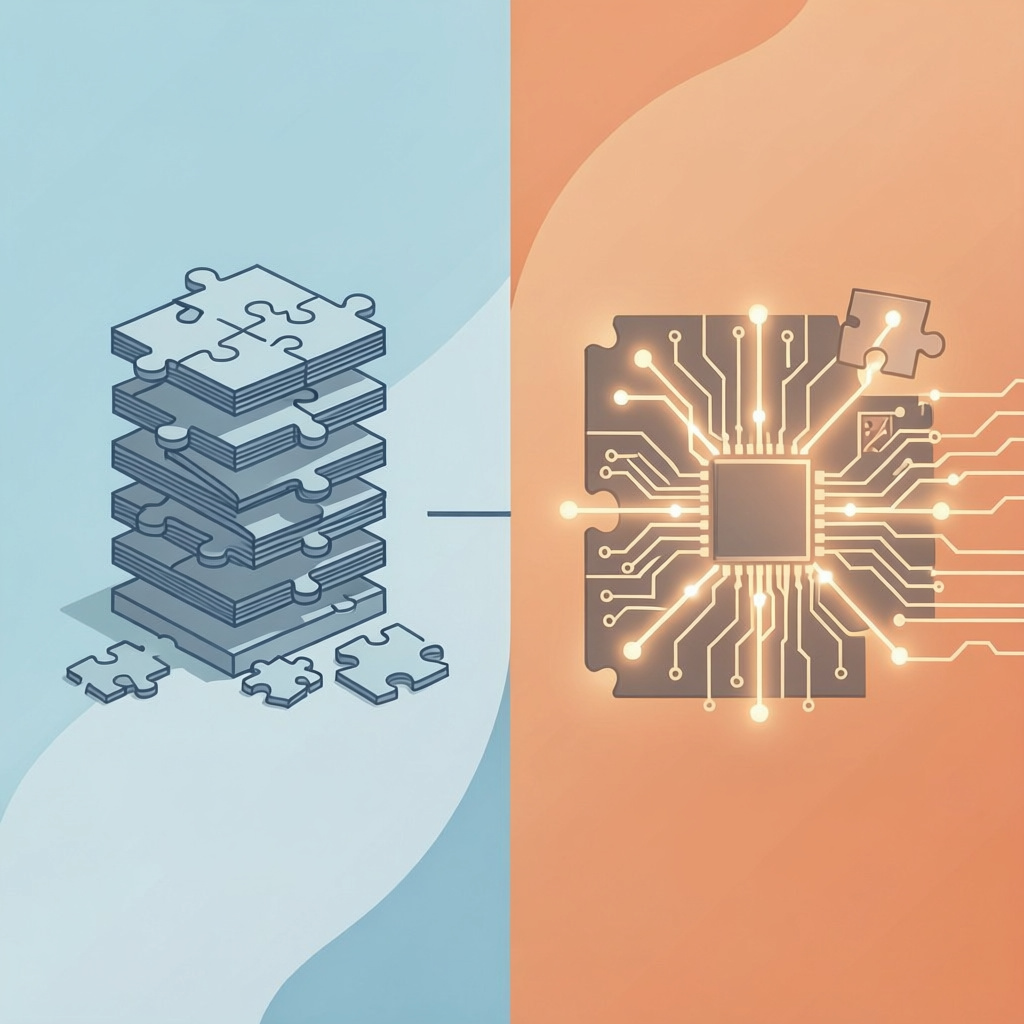
The future role of many technical specialists may look less like traditional execution and more like orchestration.
From Doing the Work to Directing the Work
The emergence of AI assistants and autonomous agents has created a new dynamic within technology teams.
In the past, professionals were often valued for their ability to personally complete highly specialised tasks. Today, the ability to guide AI systems toward successful outcomes is becoming increasingly important.
A software engineer may spend less time manually writing every line of code and more time defining requirements, reviewing outputs, identifying risks, and ensuring quality. Infrastructure specialists increasingly oversee automated deployments rather than performing every configuration manually. Data professionals often focus on interpreting results and validating insights instead of preparing every dataset themselves.
This shift does not reduce the importance of technical expertise. In many ways, it makes expertise even more valuable.
Organisations still need professionals who understand how systems work, recognise mistakes, and make informed decisions when AI produces incomplete or incorrect results.
Research from the McKinsey & Company shows that organisations continue accelerating AI adoption while simultaneously increasing demand for employees capable of supervising, integrating, and extracting value from those technologies.
The most valuable professionals increasingly become those who can direct intelligent systems effectively.
AI Creates More Output, Not Less Need for Oversight
A common misconception is that AI reduces the need for human involvement. In reality, many organisations are discovering the opposite.
AI can produce work at remarkable speed. However, speed alone does not guarantee quality, accuracy, security, compliance, or alignment with business objectives.
Every AI-generated output still requires human judgement.
Software must be reviewed. Security vulnerabilities must be identified. Business requirements must be interpreted correctly. Data quality must be validated. Strategic priorities must remain aligned with organisational goals.
Consequently, technical professionals increasingly act as quality controllers, decision-makers, and coordinators rather than simply task executors.
The ability to evaluate and refine AI output is becoming just as important as the ability to create the original output manually.
Technical Expertise Remains the Foundation
Some commentators suggest that AI will eliminate the need for deep technical knowledge. Current evidence points in the opposite direction.
The better an individual understands their domain, the more effectively they can work with AI tools.
A skilled software engineer can identify flawed code generated by an AI assistant. An experienced cybersecurity specialist can recognise hidden risks that automation may overlook. A seasoned infrastructure engineer understands operational dependencies that AI may not fully appreciate.
Without technical expertise, organisations risk accepting incorrect recommendations, introducing vulnerabilities, or making poor decisions based on incomplete information.
Research from the World Economic Forum identifies analytical thinking, technological literacy, problem-solving, and leadership among the fastest-growing workforce requirements as AI adoption expands.
Knowledge remains essential. The difference is how that knowledge gets applied.
The Rise of the Technical Orchestrator
A new category of professional is beginning to emerge across technology functions.
These individuals combine technical expertise with coordination, communication, business understanding, and AI management capabilities. Rather than focusing exclusively on producing outputs themselves, they guide teams of humans and AI systems toward desired outcomes.
In practice, this means defining objectives, selecting appropriate tools, validating results, managing risk, and ensuring quality standards remain high.
Many organisations already rely on similar skills in architecture, programme management, product leadership, and technical consulting roles. AI simply expands the importance of these capabilities across a much broader range of positions.
The professionals who thrive in this environment will likely be those who can bridge technical depth and strategic thinking.
Hiring Priorities Are Beginning to Shift
The rise of AI orchestration is changing how organisations think about hiring.
Technical skills remain critical, but employers increasingly seek individuals who can operate effectively in AI-enhanced environments. Communication, critical thinking, stakeholder management, problem-solving, and decision-making have become more valuable because they complement automated systems rather than compete with them.
Hiring managers are placing greater emphasis on adaptability and learning agility. Technology continues evolving rapidly, making the ability to learn new tools and approaches more important than mastery of any single platform.
This trend also affects leadership hiring. Organisations increasingly require managers who understand both technology and workforce transformation. Technical leadership now involves guiding people through change while integrating AI capabilities responsibly and effectively.
Software Development Offers an Early Example
Software engineering provides one of the clearest examples of this transition.
Modern AI coding assistants can generate substantial amounts of code, suggest solutions, write tests, and accelerate development workflows. These capabilities improve productivity, but they also change the nature of the engineer’s role.
Developers increasingly spend time reviewing architecture, defining requirements, managing technical debt, validating outputs, and ensuring solutions align with broader business needs.
The engineer becomes less of a code producer and more of a technical decision-maker.
Research from the Gartner suggests that AI-assisted software development will continue expanding rapidly, increasing productivity while reshaping how development teams operate.
This pattern is likely to spread across many technical disciplines.
Infrastructure and Cybersecurity Are Following the Same Path
Infrastructure and cybersecurity professionals are experiencing similar changes.
Automation platforms already manage large portions of cloud provisioning, monitoring, deployment, and system maintenance. AI tools increasingly support threat detection, vulnerability analysis, and incident response.
Yet these environments still require experienced professionals to make decisions, assess risk, and manage exceptions.
Cybersecurity provides a particularly important example. AI can identify threats at unprecedented speed, but organisations still need experts who understand context, evaluate severity, and determine appropriate responses.
As AI capabilities grow, demand for experienced professionals who can supervise these systems may increase rather than decrease.
Human Skills Become a Competitive Advantage
As technology handles more execution-level work, uniquely human capabilities become increasingly important.
Communication helps align teams and stakeholders. Critical thinking identifies risks and weaknesses. Creativity supports innovation and problem-solving. Leadership enables organisations to navigate change effectively.
The ability to influence, collaborate, and make sound decisions grows more valuable when AI performs routine tasks.
Employers increasingly recognise that technical excellence alone may not be sufficient. Future success often depends on combining technical expertise with strong human skills.
This shift creates opportunities for professionals who can operate effectively across both technical and business domains.
The Future Belongs to Human-AI Collaboration
The rise of AI managers does not signal the end of technical careers. Instead, it signals the evolution of those careers.
Technology professionals are moving beyond purely task-based responsibilities and toward roles that focus on orchestration, oversight, and strategic direction. AI handles more execution, while humans provide judgement, context, and accountability.
For employers, this transformation changes hiring priorities. Organisations increasingly need professionals who can guide intelligent systems, manage complexity, and connect technical outcomes to business goals.
For candidates, the message is equally clear. Technical expertise remains valuable, but the professionals who thrive in the coming years will be those who learn how to lead technology rather than simply operate it.
The future workplace may contain more AI than ever before, but human judgement will remain at the centre of successful technology delivery.