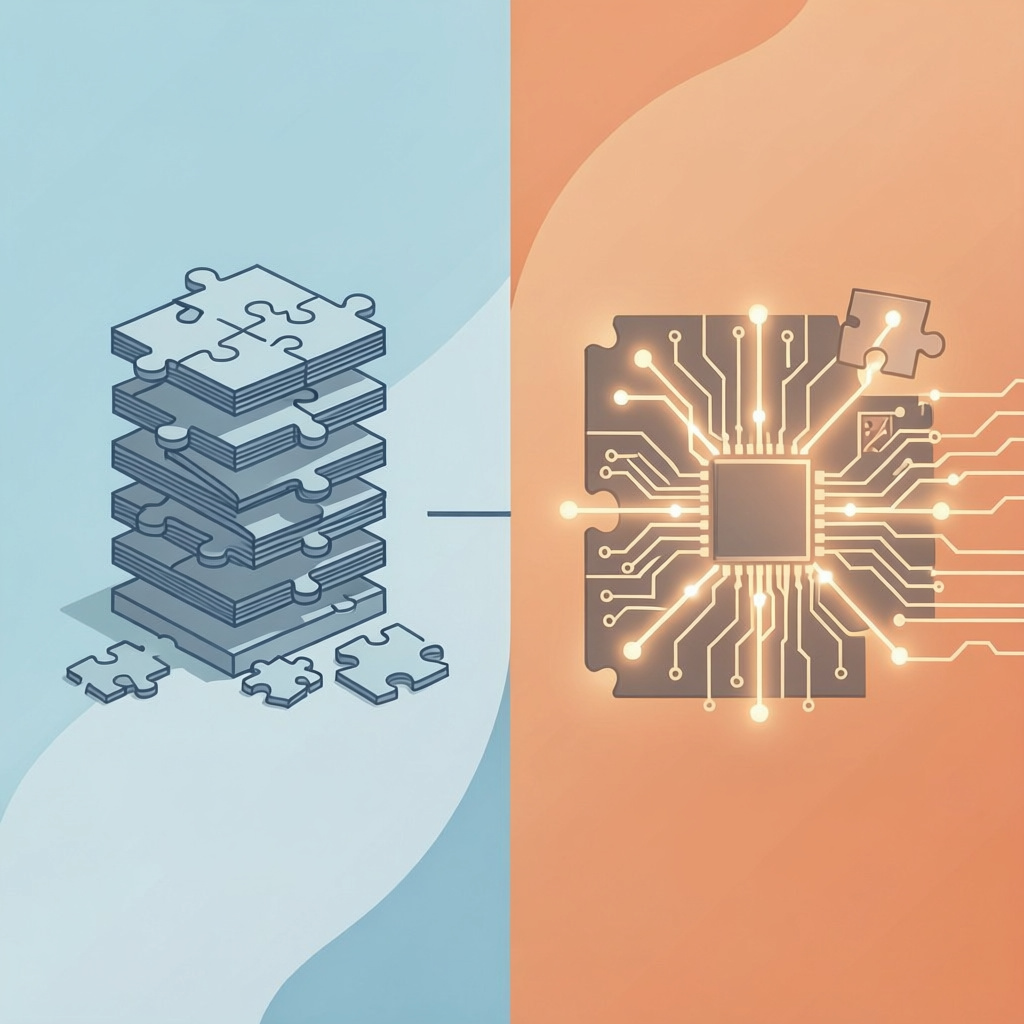
AI Has Moved From Experiment to Infrastructure
Artificial intelligence no longer sits in innovation labs or isolated pilot projects. Organisations now embed AI into everyday operations across software development, cybersecurity, customer service, data analysis, and decision-making workflows. As adoption accelerates, compliance stops functioning as a static policy document and starts shaping how companies actually hire.
Hiring teams now face a new reality. They cannot separate AI usage from job design. They must define roles that include responsibility for safe, ethical, and controlled use of AI systems from day one.
Research from the World Economic Forum highlights that AI adoption continues to reshape workforce structures, increasing demand for governance, oversight, and responsible deployment skills alongside technical capability.
This shift changes compliance from a document stored in HR systems into a core hiring requirement embedded across technical teams.
Regulators Now Expect Proof of Responsible AI Use
Governments and regulators no longer treat AI as a niche concern. They increasingly require organisations to demonstrate transparency, accountability, and risk management when deploying AI systems.
The Organisation for Economic Co-operation and Development continues to emphasise the importance of trustworthy AI frameworks that prioritise transparency, safety, and accountability in real-world deployments.
At the same time, the European Union’s AI governance approach reinforces the expectation that organisations must document how AI systems operate, what risks they introduce, and how humans remain involved in oversight. Even UK-based organisations increasingly align with these frameworks due to cross-border operations and vendor dependencies.
These expectations create a direct impact on hiring. Employers now seek professionals who understand not only how to build or use AI systems, but also how to operate them within regulated environments.
Compliance Now Starts at Job Design, Not Audit Stage
Traditionally, compliance teams reviewed processes after systems went live. That model no longer works in AI-driven environments.
AI systems evolve continuously. Models update, data changes, and automation expands. As a result, risk no longer appears at a single point in time. It exists throughout the lifecycle of a system.
Hiring teams now embed compliance expectations directly into job descriptions. Developers, data engineers, cybersecurity specialists, and product managers increasingly carry responsibility for ensuring AI systems remain safe, explainable, and aligned with governance standards.
The Gartner highlights that organisations increasingly integrate AI governance directly into software development and operational workflows rather than treating it as a separate control function.
This shift transforms compliance from a back-office function into a core expectation for technical talent.
AI Expands Risk Faster Than Traditional Hiring Cycles Can Respond
AI adoption introduces new categories of risk that evolve faster than traditional hiring processes. These include model bias, data leakage, hallucinated outputs, prompt injection vulnerabilities, and uncontrolled automation behaviour.
Each new deployment expands the potential attack surface.
Hiring cycles, however, still operate on human timelines. Organisations often require weeks or months to recruit specialised talent, while AI systems can scale across entire business functions in days.
This imbalance forces employers to rethink workforce design. Instead of relying solely on centralised compliance teams, organisations now distribute responsibility across engineering, data, and infrastructure roles.
The McKinsey & Company notes that AI adoption increases organisational exposure to operational and governance risks unless companies embed controls directly into workflows and skill sets.
As a result, compliance becomes a hiring requirement rather than a downstream safeguard.
Technical Skills Alone Are No Longer Enough
Employers continue to value strong technical ability, but technical skills alone no longer guarantee hiring success in AI-enabled environments.
Organisations now expect professionals to understand how AI systems behave in real-world contexts. This includes recognising when outputs may be unreliable, identifying ethical risks in automated decision-making, and ensuring systems remain aligned with regulatory requirements.
A software engineer may need to validate AI-generated code for security vulnerabilities. A data scientist may need to assess whether training data introduces bias. A DevOps engineer may need to ensure automated pipelines do not bypass governance controls.
The Office for National Statistics continues to track the growth of digital roles, but hiring patterns increasingly reflect a convergence between technical capability and governance responsibility.
This convergence reshapes how organisations evaluate candidates across all levels of seniority.
AI Compliance Skills Now Span Every Technical Discipline
AI compliance no longer belongs exclusively to legal or risk teams. It now spreads across multiple technical disciplines.
Software engineers must understand secure coding practices in AI-assisted development environments. Infrastructure engineers must consider how automated systems interact with sensitive data. Cybersecurity professionals must account for AI-driven threat surfaces. Data professionals must ensure responsible handling of training and inference data.
Even product and delivery roles now carry responsibility for ensuring that AI-enabled features meet transparency and accountability standards.
This broad distribution of responsibility creates a new hiring challenge. Organisations must find candidates who combine domain expertise with awareness of governance principles, even if they do not hold formal compliance backgrounds.
Skills Gaps Are Creating Hiring Pressure
Demand for professionals who understand both AI systems and compliance frameworks continues to outpace supply.
Many experienced professionals possess either strong technical capability or governance experience, but fewer combine both effectively. This gap creates pressure on hiring teams to rethink traditional role definitions.
Instead of searching for fully formed “AI compliance specialists,” organisations increasingly look for adjacent talent with transferable skills. Cybersecurity engineers, infrastructure architects, data governance specialists, and senior developers often transition into AI governance roles with targeted upskilling.
The World Economic Forum highlights that reskilling and adaptability will play a central role in closing emerging AI-related workforce gaps across industries.
This trend reinforces the importance of internal capability development alongside external hiring.
Hiring Managers Now Evaluate Risk Awareness as a Core Skill
Hiring decisions increasingly assess how candidates think about risk, not just how they perform technical tasks.
Interview processes now often explore how candidates would handle AI uncertainty, data sensitivity, model errors, or system failures. Employers want evidence that professionals can operate responsibly within complex, fast-moving environments.
This change reflects a broader shift in workforce expectations. Organisations no longer view compliance as a separate discipline. Instead, they treat it as a mindset embedded across technical roles.
Candidates who demonstrate awareness of ethical, operational, and regulatory considerations often stand out more strongly than those who focus purely on technical depth.
AI Compliance Will Shape Future Workforce Design
AI continues to reshape how organisations design roles, build teams, and distribute responsibility. Compliance now sits at the centre of that transformation.
Hiring strategies must evolve accordingly. Employers cannot treat AI governance as an optional layer added after recruitment. Instead, they must integrate it into role definitions, skill requirements, and workforce planning from the outset.
This shift also changes career development pathways. Professionals who develop AI literacy alongside governance awareness position themselves for long-term relevance in evolving technology environments.
Compliance Has Become a Hiring Strategy
AI compliance no longer functions as a standalone policy. It now operates as a hiring filter, a skill requirement, and a workforce design principle.
Organisations that recognise this shift early build stronger, safer, and more adaptable teams. Those that do not risk deploying AI systems without sufficient oversight or capability to manage emerging risks.
The direction of travel is clear. AI will continue expanding across every layer of technology and business operations. As it does, the ability to hire for compliance-aware technical talent will become a defining factor in organisational resilience.